Harvard Yale vs Yalecrest: How These SLC Areas Compare
June 11, 2026
June 11, 2026
If you have been comparing Harvard/Yale and Yalecrest, you are not alone. These two names often sound like separate Salt Lake neighborhoods, but in practice they overlap, and that can make your search feel more confusing than it needs to be. The good news is that once you understand how the labels work, what the housing stock actually looks like, and where the block-by-block differences show up, it becomes much easier to decide what fits your goals. Let’s dive in.
The clearest way to think about these two names is this: Yalecrest is the broader umbrella, and Harvard/Yale is the tighter historic pocket within it.
Salt Lake City’s historic preservation materials treat the names as closely connected. The city notes that the Yalecrest Historic District is also locally known as Harvard-Yale, and that it includes local historic districts such as Harvard Heights, Harvard Park, Upper Harvard Yale Park, Princeton Park, and Douglas Park.
So if you are asking whether Harvard/Yale or Yalecrest is “better,” the more useful question is usually: which part of the larger Yalecrest area best matches your priorities? In most cases, you are comparing a more specific core pocket to a broader area with similar character but more variation from one subdivision and block to the next.
Harvard/Yale tends to read as the more tightly defined, more block-specific version of the neighborhood experience people usually picture when they think about this part of 84105. It is where the historic identity feels especially concentrated.
City references point to pockets like Upper Harvard and Yale Park Plat A along Harvard Avenue between 1500 East and 1700 East. For a buyer, that matters because the feeling here is often less about a broad ZIP-code search and more about finding the right few blocks.
If you are drawn to classic east-side Salt Lake streetscapes, this is often the image you have in mind. Think mature trees, a visually cohesive run of homes, and a strong sense of architectural continuity rather than a patchwork of unrelated styles.
Yalecrest offers the same architectural DNA, but across a larger footprint. Salt Lake City says the area was built out quickly from 1910 to 1938 and includes more than 20 subdivisions, with roughly 1,400 homes that vary in size and style.
That means Yalecrest is consistent, but not identical. You still get the preserved, established character the area is known for, but the experience can shift depending on the specific subdivision, lot, home size, and proximity to nearby commercial nodes, parks, and trail connections.
For many buyers, that broader mix is actually a strength. It can create more options in terms of layout, scale, and price point within the same general neighborhood identity.
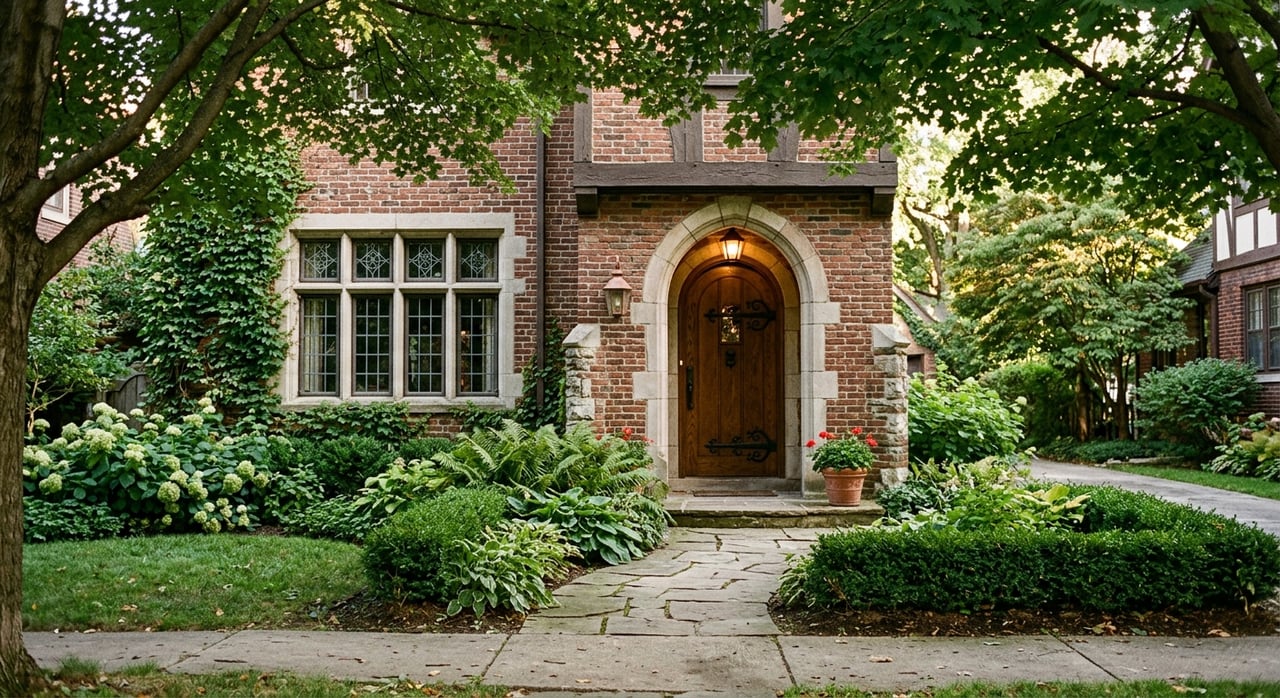
If design matters to you, this part of Salt Lake stands out for a reason. City sources describe the housing stock as dominated by period-revival cottages, especially English Tudor and English Cottage styles, along with larger Tudor homes and renovated bungalows.
The area is also known for uniform setbacks, comparable massing, mature landscaping, and a high level of visual cohesion. In plain terms, the streets tend to feel intentional and preserved rather than pieced together over time.
That is a major reason these homes continue to attract design-minded buyers, relocation clients, and owners who value architectural character. If you want a neighborhood where the built environment feels disciplined and established, both Harvard/Yale and Yalecrest have a lot to offer.
One of the biggest mistakes buyers make here is assuming every part of Yalecrest or Harvard/Yale feels exactly the same. It does not.
Because Yalecrest includes many subdivisions and a wide range of homes, the differences from block to block can affect your experience more than the neighborhood label itself. One street may feel especially tucked-in and historic, while another may offer easier access to daily errands, nearby trail links, or a different mix of home sizes.
This is why a hyper-local search matters. In this part of Salt Lake, your ideal fit often comes down to the specific blocks that best align with how you want to live.
Buyers are often drawn to this area for walkability, but it helps to define what that means here. This is not the same kind of walkability you would expect in a dense downtown core.
Instead, the appeal is neighborhood-scale convenience. Salt Lake City highlights walkability, neighborhood byways, and urban trails as important parts of the area’s transportation network, and nearby routes like the McClelland Trail and the 600 East Neighborhood Byway help connect surrounding east-side destinations.
For many people, that creates a balanced lifestyle. You get a residential setting with mature trees and historic homes, plus useful options for walking or biking to nearby districts, parks, and everyday amenities.
Part of what makes this area so appealing is what surrounds it. City materials describe 9th & 9th as a leafy business district with restaurants, treats, movies, and outdoor art, while the 15th & 15th area runs along 1500 East and includes a neighborhood commercial node near 1700 East and 1300 South.
You are also close to Liberty Park, which the city describes as Salt Lake City’s oldest and second-largest park, with trail loops, Tracy Aviary, the Chase Home Museum, and other amenities. Yalecrest’s neighborhood materials also call out nearby parks and landmarks including Laird Park, Miller Park, Harvard Park, Red Butte Creek, and Olympic Cauldron Park.
The result is a lifestyle that tends to feel connected without being overly busy. If you want access to parks, local business districts, and bikeable or walkable connections, this area checks many of those boxes.
This is one of the most important practical differences in these neighborhoods, especially if you care about renovations or exterior updates. Salt Lake City states that local historic district properties are subject to design review for exterior changes and proposed demolitions so that alterations remain compatible with the surrounding historic architecture.
For some buyers, that is a major benefit. It helps preserve the visual consistency that makes these streets so special.
For others, it is a factor to think through carefully. If you want total freedom to make fast exterior changes without review, another part of the city may be a better match.
If you are choosing between Harvard/Yale and Yalecrest, it helps to focus on your real priorities instead of the label alone.
Harvard/Yale may be the stronger fit if you want:
Yalecrest may be the stronger fit if you want:
In both cases, the right home is often less about choosing a winner and more about identifying the right micro-location.
If you own in Harvard/Yale or Yalecrest, your marketing strategy should reflect the nuance of the location. Buyers in this segment are often responding to design, preservation, streetscape consistency, and lifestyle access all at once.
That means presentation matters. So does framing your home correctly within the broader neighborhood story.
A seller in the tighter Harvard/Yale pocket may benefit from emphasizing block-level identity and architectural setting. A seller elsewhere in Yalecrest may need a more precise narrative around subdivision character, updates, lot feel, and proximity to parks or neighborhood commercial areas.
This is also where thoughtful pre-list planning can make a real difference. In a historic area with design review considerations, smart updates tend to be the ones that respect the home’s character while improving function, appeal, and market readiness.
This is not a neighborhood where one number tells the whole story. As of April 30, 2026, Zillow places the average home value in 84105 at $731,367, while Realtor.com’s Yalecrest page shows a median listing price of $1.235 million, with 9 active listings and a median 36 days on market.
That spread tells you something important. The historic core sits in a premium east-bench tier, and pricing can vary significantly based on location, architecture, condition, updates, and the specific pocket within the broader neighborhood.
If you are buying, avoid making assumptions based only on a ZIP code average. If you are selling, avoid relying on broad neighborhood labels without looking closely at your home’s exact position in the market.
If your goal is the most iconic version of this neighborhood experience, Harvard/Yale is often the name that captures that tighter, more specific historic feel. If your goal is to stay within the same design-rich, amenity-connected area while keeping more options open, Yalecrest may give you a wider field to explore.
The truth is that both names point to one of Salt Lake City’s most distinctive residential areas. The best choice usually comes down to how much you value block-level identity, architectural consistency, nearby amenities, and the realities of owning in a historic district.
If you want help comparing specific blocks, evaluating a home’s renovation potential, or positioning your property for sale in this part of Salt Lake, Jazmin Adamson offers warm, strategic guidance rooted in local market knowledge and a strong design lens.
Stay up to date on the latest real estate trends.


Whether buying or selling in Salt Lake City, Jazmin provides expert guidance, tailored strategies, and hands-on support to help you achieve your goals.